


Press Releases
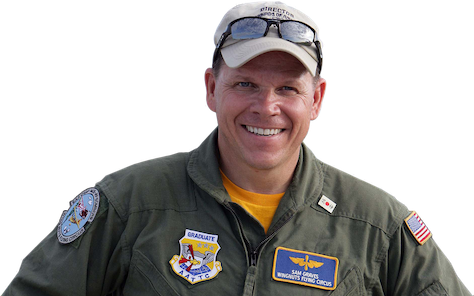
Chairman Graves’ Statement in the House During Today’s Consideration of ROTOR ActTransportation and Infrastructure Committee Chairman Sam Graves (R-MO) delivered the following statement on the Floor of the U.S. House of Representatives today during debate on S. 2503, the Rotorcraft Operations Transparency and Oversight Reform (ROTOR) Act:
Aviation has been in my blood my entire life, and it continues to be something I love. In the middle of my family farm in Tarkio, Missouri is Gould Peterson Municipal Airport, named after my uncle. Growing up, when my brother and I weren’t doing chores, we’d do anything to mooch an airplane ride. That love of aviation and being a pilot has never left me. When I came to Congress in 2001, I joined the Transportation and Infrastructure Committee to work on these issues. It has been extremely rewarding, and being a pilot has provided me with invaluable insight into these issues. Throughout the years, I have worked on several pieces of legislation that addressed safety gaps following unimaginable tragedy. Every aviation accident typically has multiple contributing factors. Too often I have seen Congress react prematurely in a way that fails to address the multi-layered causes of accidents in a comprehensive and consensus-driven manner – and in some instances, to the detriment of fostering sound safety policy that prevents unintended consequences. This is why I have long believed the best way to honor the victims of aviation accidents is for Congress to wait until the National Transportation Safety Board (NTSB) completes its investigation, so Congress first has all the facts. On January 29, 2025, an Army helicopter collided with an American Airlines Flight while on final approach to Ronald Reagan Washington National Airport (DCA). The fatal collision claimed the lives of all 67 passengers and crew in both aircraft. The NTSB, along with federal partners and law enforcement agencies, jumped into action that cold January night, and the NTSB carried out, over the last year, one of the most impressive and comprehensive investigations I’ve seen. I’d like to thank the NTSB for their dedicated work over the past year. The NTSB officially concluded its investigation and issued its Final Report last week, with numerous findings, the probable cause, and 50 recommendations to ensure this doesn’t occur again. It’s my deeply rooted respect for the NTSB’s investigations and processes that has led me to believe S.2503 does not sufficiently or properly address the findings and recommendations of the Board. That is why, last Friday, I joined together with Transportation and Infrastructure Committee Ranking Member Rick Larsen, Armed Services Committee Chairman Mike Rogers, and Armed Services Committee Ranking Member Adam Smith to introduce the ALERT Act. The ALERT Act is a comprehensive package of improvements that addresses all 50 safety recommendations issued by the NTSB. Unlike the bill before us today, the ALERT Act tackles all the identified root causes that led to this deadly crash. Unfortunately, the ROTOR Act touches on only two of the NTSB’s 50 recommendations and provides an overly prescriptive approach to mandating a specific technology, which is still largely under development, in a manner that can prove burdensome to some operators and create barriers to its adoption. I’d remind my colleagues that we’ve been in this position before. Congress mandated the exact technology prescribed in the ROTOR Act in 2012. Due to the lack of maturity of the technology and scalable applications that can benefit a broad range of operators, the mandate proved to be so unworkable that this body had to repeal that mandate in 2018. Sadly, many of the considerations that led Congress to repeal that mandate still exist today. Don’t just take my word for it; listen to the words of an NTSB Board Member, who in the Final Report said, “While we laud ADS-B systems as an emerging technology in commercial fixed-wing and rotorcraft aviation that could have prevented this accident, it is still exactly that, an emerging technology. There are still technological barriers to implementing ADS-B In into the 5,500 commercial aircraft that are in the skies at any given moment.” Let me be extremely clear – as a pilot myself, I unequivocally support the adoption of safety enhancing technologies. I want to get this right. Ultimately, any successful directive or mandate from Congress will be calculated, scalable, and future proof – not a blanket mandate that limits the aviation community to one technology. We’ve tried that before and failed, leading to no tangible safety benefit. My greatest fear is that passage of this legislation today, in its current form, will unintentionally lead to an operational crisis in 2031 and force future Congresses to have the same debate on the need to repeal another unworkable government mandate. It is that concern that informed the approach we took in the bipartisan ALERT Act. By implementing a performance-based and technology agnostic approach, aircraft would be able to be equipped with the appropriate collision mitigation system, thereby enhancing awareness for all. While I rise in opposition to this bill, I know that all Members of this body and across the Capitol have a shared priority: a commitment to aviation safety. It was that shared priority that brought us together last Congress to pass the FAA Reauthorization Act of 2024 – landmark legislation that is improving aviation safety and providing benefits to the flying public. Here in the House, we will continue our legislative effort around the bipartisan ALERT Act to ensure all the NTSB’s recommendations are addressed. |

