| THE RUNWAY: MARCH RECAP |
| In this Issue: | ||||||
|
|
||||||
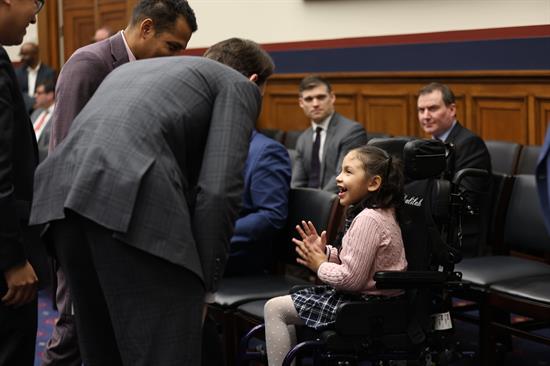
| This month, T&I approved Dalilah’s Law, legislation led by Highways and Transit Subcommittee Chairman David Rouzer (R-NC) to strengthen commercial driver’s license (CDL) requirements and improve safety on America’s roadways. Named in honor of Dalilah Coleman, a young girl severely injured by an unqualified and illegal immigrant semi-truck driver, the bill ensures commercial drivers are properly trained, meet federal safety standards, and can read and understand English to safely navigate roads and communicate with law enforcement.
The legislation also cracks down on illegal CDL issuance, increases accountability for states, and targets fraudulent practices in the trucking industry. Dalilah’s Law marks a significant step toward preventing avoidable crashes, ensuring only qualified drivers are behind the wheel, and better protecting the traveling public. Dalilah’s Law parallels and supports efforts by President Trump and Transportation Secretary Duffy to crack down on this safety crisis that was fueled by the open border policies of the Biden Administration, and it codifies many of the Administration’s actions to ensure safety on the nation’s roads. Secretary Duffy, House Republican leaders, and numerous trucking and supply chain groups have expressed support and urged passage of the bill. |
||||||
| FLOOR ACTIVITY | ||||||
| The House advanced a series of fourteen bipartisan measures focused on strengthening aviation safety and innovation, improving airport infrastructure, expanding broadband access, supporting American jobs, and reducing federal costs. Several of the bills improve aviation efficiency and safety by enhancing supply chain security, fostering the return of supersonic flight, modernizing pilot certificate processes through digitization, easing regulatory burdens for airport construction while maintaining safety standards, and clarifying rules for recreational drone use. Other measures address broader priorities, including protecting water resources, expanding broadband access in rural Appalachia, reducing costs for federal building projects, supporting the return of manufacturing jobs to the U.S., and more.
Additionally, the House passed the Defending American Property Abroad Act of 2026, a bipartisan bill to protect U.S.-owned assets from being unlawfully seized by foreign governments. The legislation gives the president authority to deny U.S. port entry to vessels linked to facilities that were expropriated from American companies, creating real consequences for countries that take American property. The bill aims to deter future seizures, protect American businesses and workers, and strengthen economic security by holding foreign governments accountable. |
||||||
| SUBCOMMITTEE ACTIVITY | ||||||
| The General Services Administration: Examining the Future of Federal Real Estate Management to Reduce Costs for the Taxpayer
The Subcommittee on Economic Development, Public Buildings, and Emergency Management received testimony from General Services Administration (GSA) Administrator Edward Forst on the agency’s priorities for managing and consolidating its real estate portfolio. The hearing highlighted efforts to reduce excess federal property, address growing deferred maintenance liabilities, and reorganize the Public Buildings Service. Members also raised concerns about missed implementation deadlines and emphasized the need for stronger coordination between GSA, the Office of Management and Budget, and federal agencies. Read more about the subcommittee hearing here.
Vice Commandant Admiral Thomas G. Allan Jr. testified at a Coast Guard and Maritime Transportation Subcommittee hearing regarding plans to strengthen the Service for future mission needs. Members opened the hearing by recognizing the service and sacrifice of Aviation Survival Technician Tyler Jaggers, who tragically lost his life during a search and rescue mission off the coast of Washington. During the hearing, Members discussed the urgent need to address longstanding challenges facing the Coast Guard, including aging vessels and aircraft, delayed and over-budget acquisition programs, and deteriorating shoreside infrastructure. Members also raised concerns about the ongoing Department of Homeland Security (DHS) shutdown, noting its strain on Coast Guard personnel and operations, including uncertainty around pay and its potential impact on readiness and mission execution. Admiral Allan said, “The Coast Guard depends on timely congressional action to restore funding, and ensure the continued readiness of the service and the stability of our workforce and their families.” Admiral Allan and Members highlighted how recent historic investments included in the One Big Beautiful Bill can help reverse decades of underinvestment and support the Service’s modernization initiative. To ensure the Coast Guard can successfully modernize its fleet, strengthen readiness, and continue carrying out its critical missions, Members emphasized the importance of improved acquisition performance, stronger oversight, and timely reporting to Congress. Read more about the subcommittee hearing here. |
||||||
| MEMBERS SPOTLIGHT | ||||||
|
||||||
| IN THE NEWS | ||||||
| Chairman Graves for the Washington Times: Dalilah’s Law: Restoring safety on our roadways
Rep. Perry for Government Executive: A call to action: Shining the spotlight on public building utilization Rep. Rouzer for the Washington Times: Keep America moving with vital infrastructure investments Rep. Ezell for the Washington Times: America’s maritime renaissance depends on building the industrial base Rep. Webster for the Washington Times: Let’s build America’s future Rep. Owens for the Washington Times: Let’s highlight American infrastructure ingenuity at the Olympics Rep. Fong for the Washington Times: Three steps we can take to solve California’s water crisis Rep. Patronis for the Washington Times: Protect America’s ‘Warrior Roads’ Rep. McDowell for the Washington Times: Meeting the moment: North Carolina’s race to keep up with growth Rep. Barrett for the Washington Times: How Washington turned ‘real’ infrastructure into an ideological wish list of nonsense Rep. Hurd for the Washington Times: Rural airports are economic lifelines. Washington should treat them that way Rep. Bresnahan for the Washington Times: Safe bridges shouldn’t be just for big cities Rep. Nehls for Flying Magazine: Opinion: Clearing America’s Runway for the Future of Aviation |