| THE RUNWAY: DECEMBER RECAP |
| In this Issue: | |||||||
|
| HOUSE PASSES PERMIT ACT | |||||
|
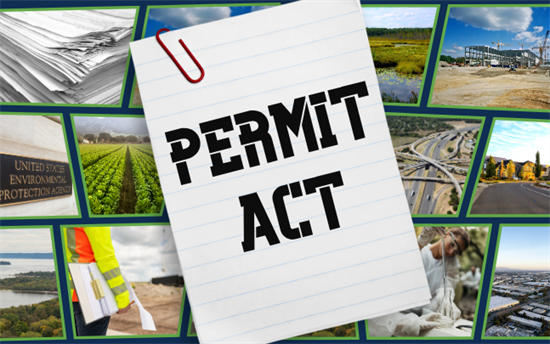
The Promoting Efficient Review for Modern Infrastructure Today (PERMIT) Act, legislation that cuts red tape, reduces costly project delays and litigation, and makes permitting under the Clean Water Act (CWA) more efficient, consistent, and transparent, was approved by the U.S. House of Representatives on December 11th. H.R. 3898, the PERMIT Act, is sponsored by Water Resources and Environment Subcommittee Chairman Mike Collins (R-GA), with Chairman Sam Graves (R-MO) as original cosponsor. The modernized permitting processes provided by the PERMIT Act will improve project affordability by reducing unnecessary regulatory burdens and costs for infrastructure builders, home builders, water utilities, energy developers, farmers, small businesses, and many others. This legislation has gained robust support from a wide range of stakeholders. The PERMIT Act incorporates many separate pieces of legislation previously introduced and championed by Chairman Collins and other T&I Committee members to provide commonsense reforms that will address these issues and strengthen permitting processes. T&I Members who contributed proposals that were incorporated into the PERMIT Act include Reps. Rick Crawford (R-AR), David Rouzer (R-NC), Doug LaMalfa (R-CA), Pete Stauber (R-MN), Dusty Johnson (R-SD), Burgess Owens (R-UT), Eric Burlison (R-MO), Jeff Hurd (R-CO), Jefferson Shreve (R-IN), Dave Taylor (R-OH), and Jimmy Patronis (R-FL). For summaries of many of the proposals that are included in the PERMIT Act, read here. Read more about the legislation here. h
|
|||||
|
|
|||||
| COAST GUARD AUTHORIZATION ACT OF 2025 SIGNED INTO LAW | |||||
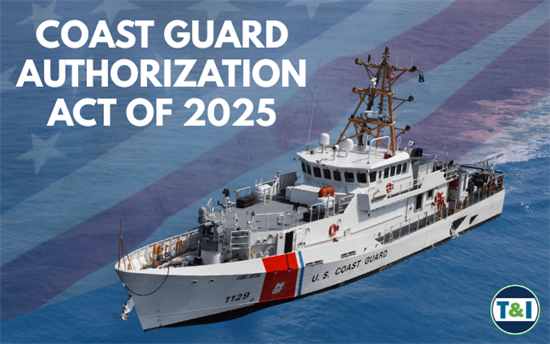
On December 18th, the President signed into law S. 1071, the National Defense Authorization Act for Fiscal Year 2026 (NDAA), which includes the Coast Guard Authorization Act of 2025 to strengthen and support the United States Coast Guard and authorize funding through fiscal year 2027. The legislation advances the Coast Guard’s core missions, including safeguarding the nation’s borders, facilitating maritime commerce, ensuring maritime safety, protecting the maritime domain, increasing transparency within the Service, and countering Chinese expansion in the Pacific. The bill authorizes appropriations through fiscal year 2027 to support Coast Guard operations and recapitalize its cutter fleet, aviation assets, shoreside facilities, and IT capabilities, while modernizing acquisition processes, improving accountability, and enabling next-generation autonomous technologies. It also requires a spending plan for the historic $24.6 billion investment provided under H.R. 1, strengthens protections against sexual assault and harassment, bolsters U.S.-build requirements and maritime safety laws, expands the pool of qualified U.S. merchant mariners, and enhances oil spill response and prevention capacity in Alaska. Read more about the legislation here. |
|||||
| COMMITTEE MARKUP | |||||
|
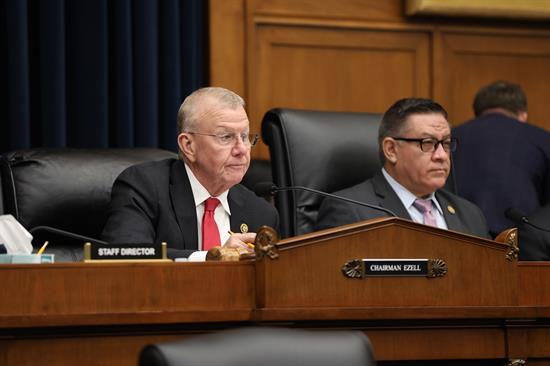
“All of us in this room are deeply grateful to the Federal employees, including air traffic controllers, who showed up day in and day out to perform their duties during the government shutdown. This bill ensures that no air traffic controller or FAA professional will have to decide between showing up to their day job or taking a side job to ensure they can continue to provide for their families in the event of lapsed appropriations.,” said Chairman Graves. Numerous stakeholder groups throughout the aviation community spoke out in support of H.R. 6086. The Committee also approved bills to improve FAA regulatory processes, reintroduce supersonic flight in the United States, improve water quality throughout the nation and emergency communications at federal buildings, a resolution approving the move of the FBI headquarters to the Ronald Reagan Federal Office Building in Washington, DC, and more. Read more about the legislation passed here.
|
|||||
|
|
|||||
| FLOOR ACTIVITY | |||||
|
|
|||||
| SUBCOMMITTEE ACTIVITY | |||||
|
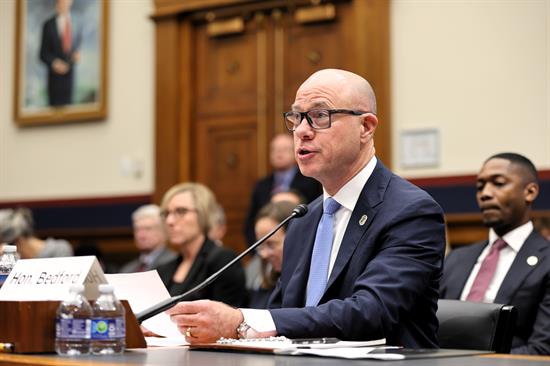
The State of American Aviation Marking his first appearance before Congress as Federal Aviation Administration (FAA) Administrator, Bryan Bedford testified before the Aviation Subcommittee at a hearing on December 16th, where Members examined recent FAA regulatory actions, ongoing aviation safety challenges, and the continued implementation of the FAA Reauthorization Act of 2024. The hearing also acknowledged the tragic January 29th accident in Washington, D.C. that claimed 67 lives, underscoring that aviation safety is a top priority. Administrator Bedford reinforced the FAA’s commitment to preventing future tragedies.
Read more about the hearing with Administrator Bedford here. America Builds: The State of the Advanced Air Mobility (AAM) Industry The Aviation Subcommittee held a hearing to examine the general state of the Advanced Air Mobility (AAM) industry, including implementation of relevant provisions from the Federal Aviation Administration Reauthorization Act of 2024 and relevant regulatory actions, as well as the AAM industry’s and state governments’ perspectives on air traffic control (ATC) modernization. Witnesses highlighted the transformative potential of electric vertical takeoff and landing aircraft to move people and goods in ways traditional aviation cannot. Chairman Troy E. Nehls (R-TX) emphasized that while the AAM industry is making steady technological progress, clearer certification pathways and coordinated ATC modernization are essential to safely scale operations and maintaining U.S. leadership in this emerging sector. Read more about the hearing here. Cutting Costs, Adding Value: The Future of Federal Property The Subcommittee on Economic Development, Public Buildings, and Emergency Management held a hearing to evaluate strategies to transform federal real estate by consolidating, relocating, and selling unused and underutilized spaces. The hearing built on the March 2025 hearing about implementing the public buildings reforms signed into law last Congress and the Committee’s ongoing efforts to right-size the federal real estate footprint and save money for the taxpayer. Chairman Scott Perry (R-PA) underscored the federal government’s continued waste on largely vacant office space, while witnesses testified that outdated utilization standards and slow building offloading processes have allowed billions of dollars in excess property and maintenance liabilities to accumulate. Witnesses also stressed that fully implementing recently enacted reforms, included in the Water Resources Development Act of 2024 (WRDA), is critical to improving accountability, modernizing the portfolio, and achieving savings. More information about the hearing can be found here. Changes in Maritime Technology: Can the Coast Guard Keep Up? The Coast Guard and Maritime Transportation Subcommittee held a hearing to examine the Coast Guard’s current and future uses of experimental maritime technologies, including autonomous and automated technologies. Building on prior discussions about the need for a clear regulatory framework, the hearing focused on how the Coast Guard is adapting its regulations to safely integrate these technologies into the Marine Transportation System while also leveraging them for its own missions. Subcommittee members asked the witnesses about how the U.S. Coast Guard plans to use the historic investments in the One Big Beautiful Bill to acquire and implement new technologies. Read more about the subcommittee hearing here.
Water Resources Development Act of 2026: Stakeholder Priorities To kick off development of the Water Resources Development Act (WRDA) of 2026, the Water Resources and Environment Subcommittee held a hearing focused on stakeholder priorities for the upcoming WRDA. This legislation remains an important tool for addressing water resources needs nationwide by supporting safe and efficient navigation that fuels the economy, protecting homes and businesses through levees and flood control projects, and providing benefits from dams and reservoirs, including electricity and recreation. “WRDA is a critical vehicle to meet the water resources needs in communities nationwide. Reliable water navigation systems allow for the safe and efficient shipping of cargo, fueling our economy,” said Subcommittee Chairman Mike Collins (R-GA). Witnesses emphasized the value of a predictable, two-year WRDA process and strong partnerships between the federal government and local stakeholders to deliver timely, effective solutions. More information about the hearing can be found here. |
|||||
| MEMBERS SPOTLIGHT | |||||
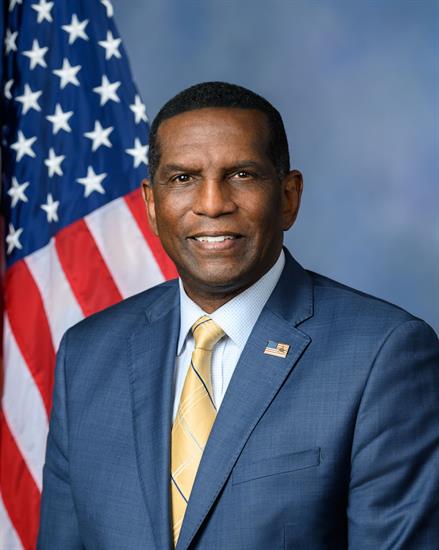
Rep. Burgess Owens (R-UT) was one of several T&I Republicans who contributed provisions to the PERMIT Act. His bill, the Water Quality Criteria Development and Transparency Act, was included in the PERMIT Act package, which the House passed on December 11th. This commonsense solution holds unelected bureaucrats accountable and ensures taxpayers and stakeholders nationwide have a voice in the regulatory process. Speaking about this issue at the core of his bill, Rep. Owens said, “The Biden EPA issued new water quality criteria with no transparency and no input from the farmers, families, and job creators who have to live with the consequences of these closed-door decisions.”
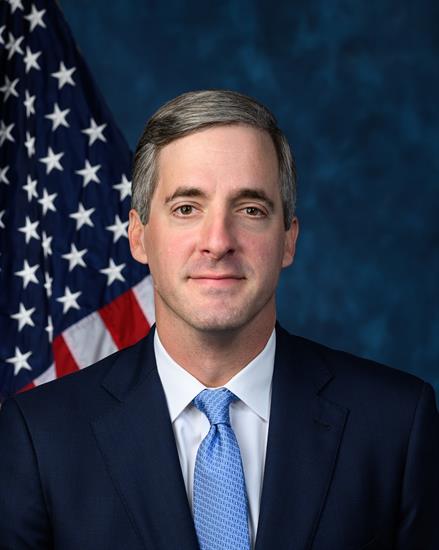
With his Aviation Supply Chain Safety and Security Digitization Act of 2025, Rep. Brad Knott (R-NC) has helped address inefficiencies in the heavily regulated aviation sector which targets the FAA’s continued reliance on paper-based processes in a modern, digital economy. His legislation, which was passed at the Committee’s December 18th markup, focuses on modernizing how aviation is regulated to improve efficiency and security. The bill addresses barriers to digital documentation, verification, and traceability and strengthens the integrity of the aviation supply chain. |
|||||
| IN THE NEWS | |||||
| Chairman Graves for the Washington Times: Trump’s permitting reform aims to cut red tape blocking energy and critical infrastructure projects Newsmax: Rep. Mike Collins Sponsoring PERMIT Act The Center Square: Digitization of aviation supply chain an opportunity to ascend out of 1950s E&E News by Politico: Clean Water Act permitting bill clears the House Politico: House passes permitting bill to ease Clean Water Act and boost pipelines Roll Call: This week: Defense authorization deal headlines floor action in Congress
|
|||||
|


| Unsubscribe | Contact |